Recorridos y colecciones
Itinerario del museo
El recorrido de visita comienza en la sala de introducción en la planta baja, donde una película subtitulada en inglés estimula una sugestiva inmersión en el fascinante mundo del encaje, mientras que los paneles didácticos desvelan los secretos de esta sabia técnica y sus puntos más utilizados (punto Venecia, punto Burano…). La visita continúa en el primer piso, donde el recorrido expositivo está dispuesto cronológicamente y se desarrolla a través de cuatro salas que corresponden a otras tantas áreas temáticas, que documentan a través de más de doscientos raros y preciosos ejemplares, la evolución del arte del encaje en Venecia desde el siglo XVI hasta el XX.
Durante el horario de apertura del museo, se podrá ver cómo trabajan las hábiles e incansables maestras encajeras, aún hoy depositarias de un arte transmitido de generación en generación.
Descripción del recorrido en inglés
From the origins to the 16th century
Venetian lace has its origins in ancient needlework techniques, which evolved during the Renaissance into a more complex and refined art form, expressing the creativity of aristocratic women. From the late 16th century onwards, lace production also developed in monasteries and charitable institutions, gradually spreading to entire female communities in response to the growing popularity of lace.
17th – 18th century
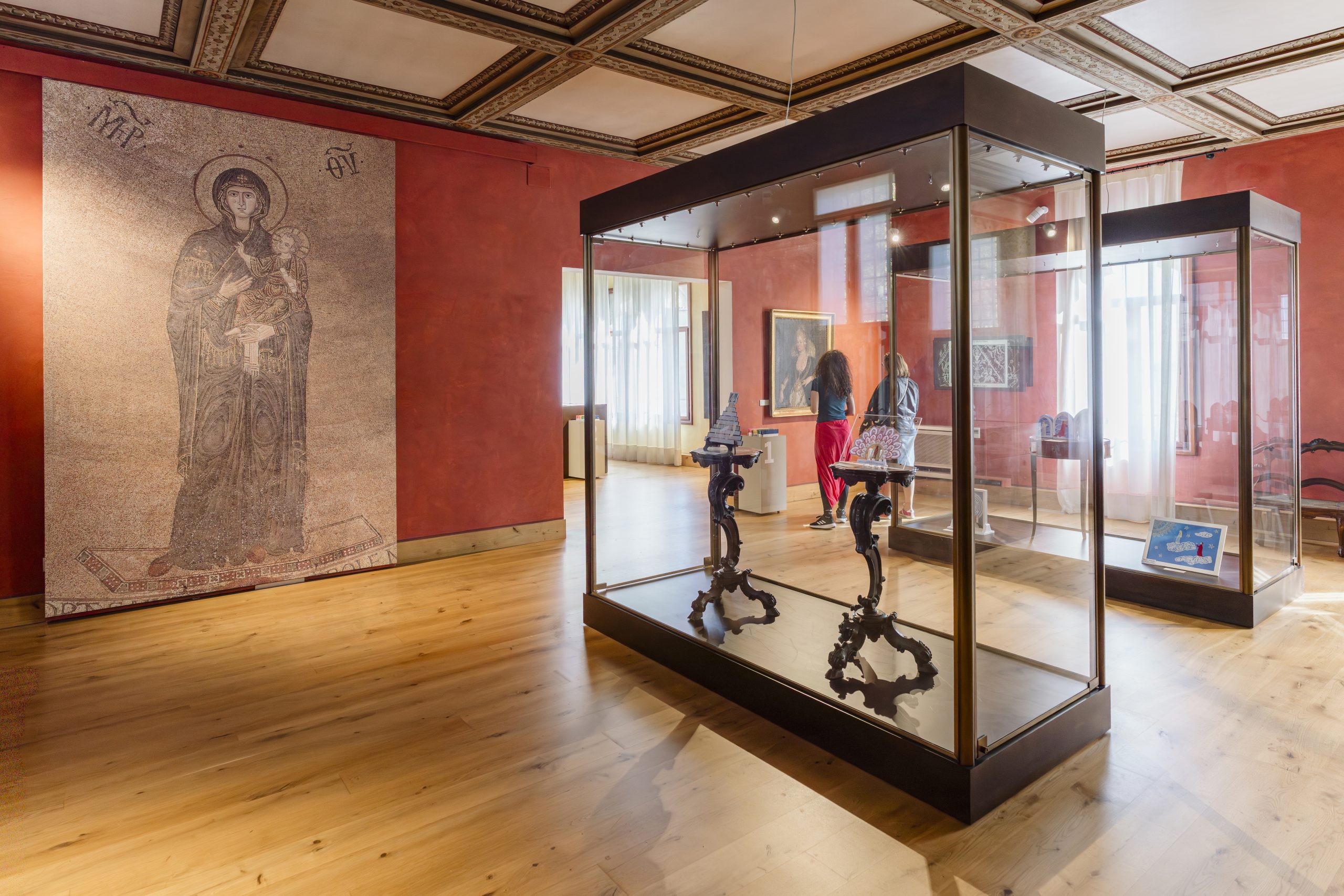
The 17th century marked the golden age of Venetian lace, renowned for its exquisite needlework, which captivated European courts. In the 18th century, lighter and more delicate lace styles became fashionable, such as punto Burano, inspired by Flemish lace-making traditions. Towards the end of the century, changing tastes and revolutionary events led to the decline of lace-making, increasingly associated with aristocratic privilege.
19th – 20th century
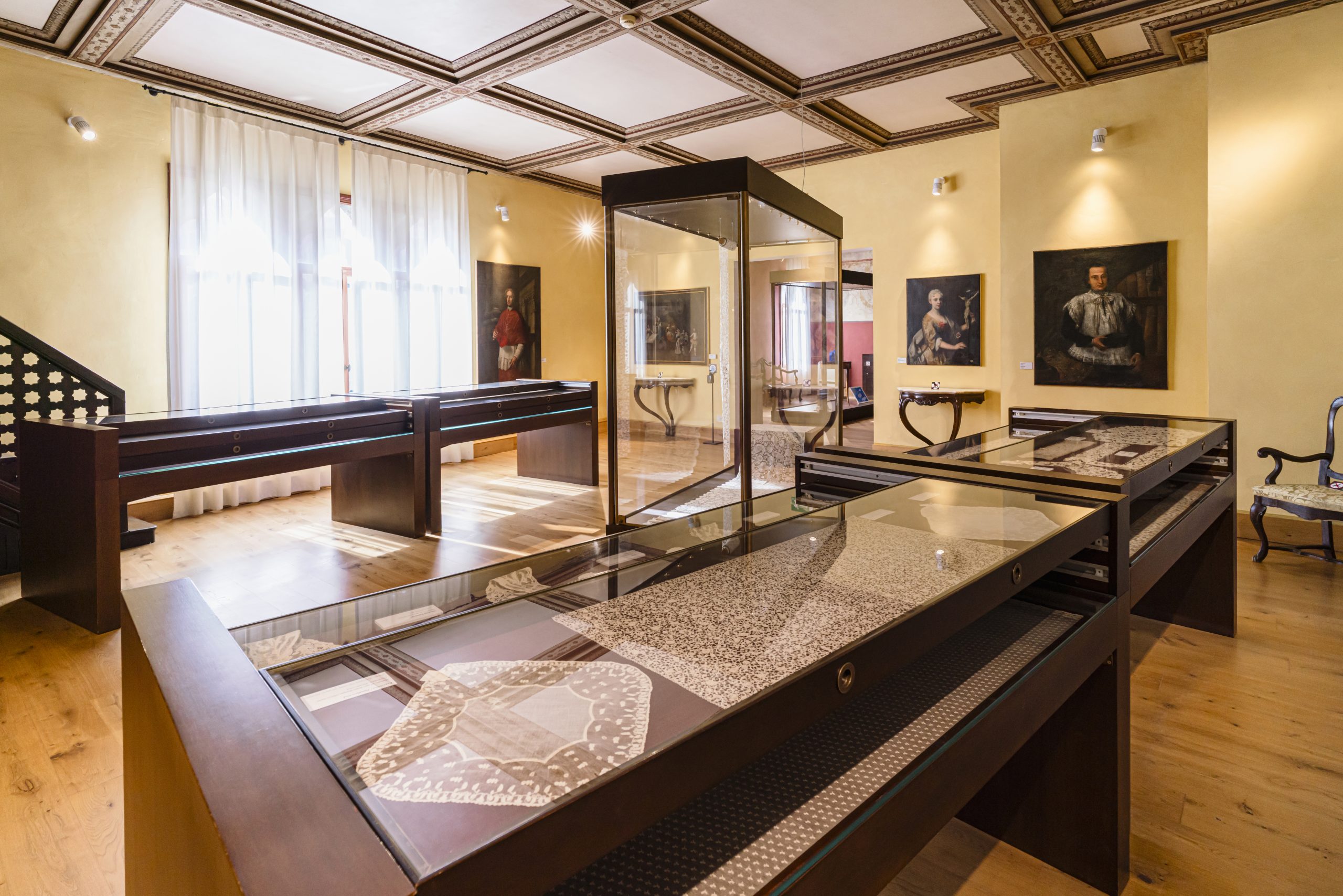
In the 19th century, lace-making experienced a revival in Europe thanks to Napoleon, who reintroduced lace into court dress. In Venice, the tradition was revived towards the end of the century through the efforts of intellectuals and aristocratic women, including Andriana Marcello. After declining once again in the post-war period, lace was rediscovered in the last quarter of the 20th century as a traditional craft to be preserved and safeguarded.
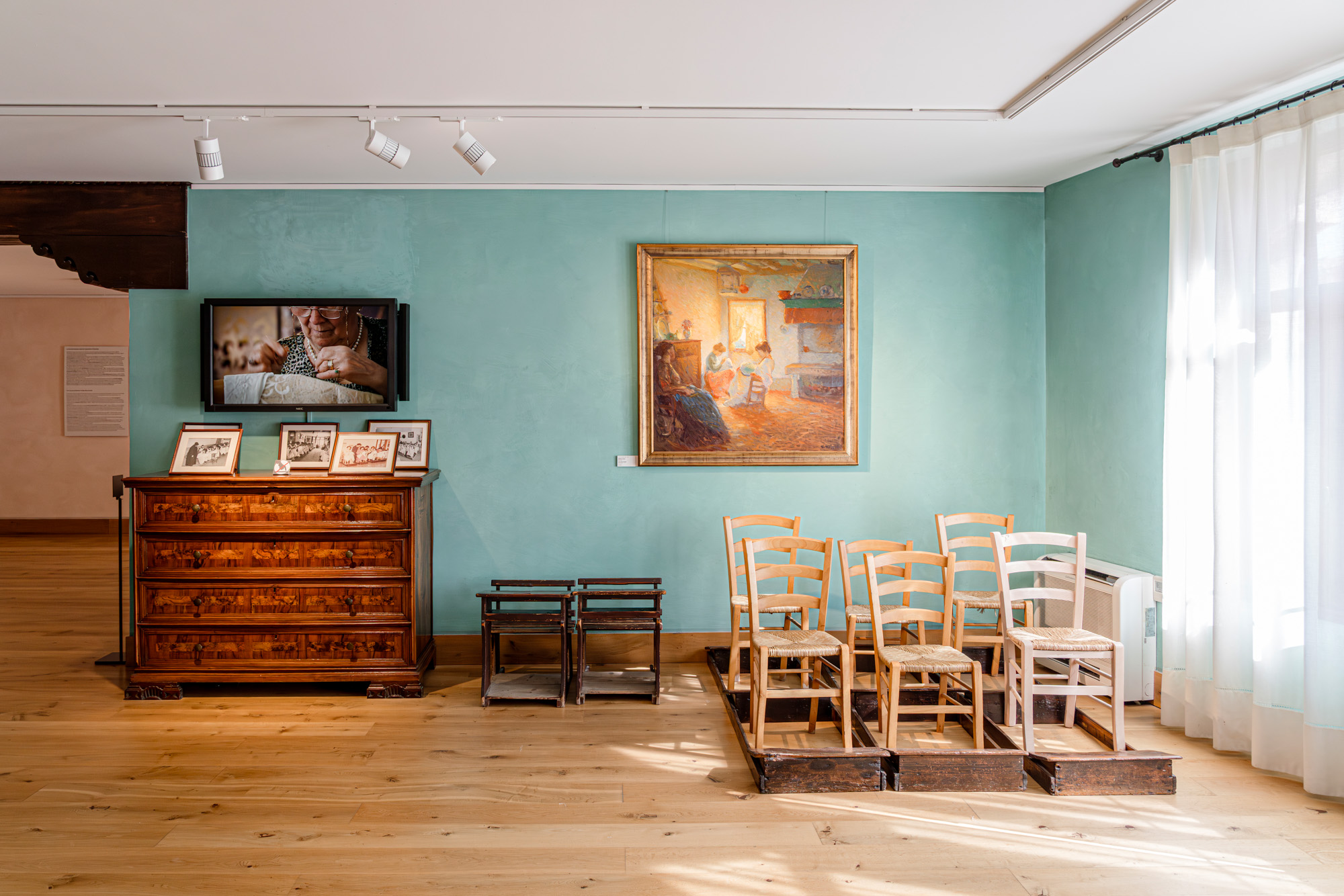
The Burano Lace School (1872-1970)
Beginning in 1872, with the opening of the first lace-making school in Burano, aristocratic families and institutions promoted the revival of Venetian lace. Despite the support of the Marcello family and the royal family, industrial competition and changing fashions led to its gradual decline. In 1981, the Lace School Museum was established, hosting exhibitions and courses aimed at preserving and passing on this craft tradition.
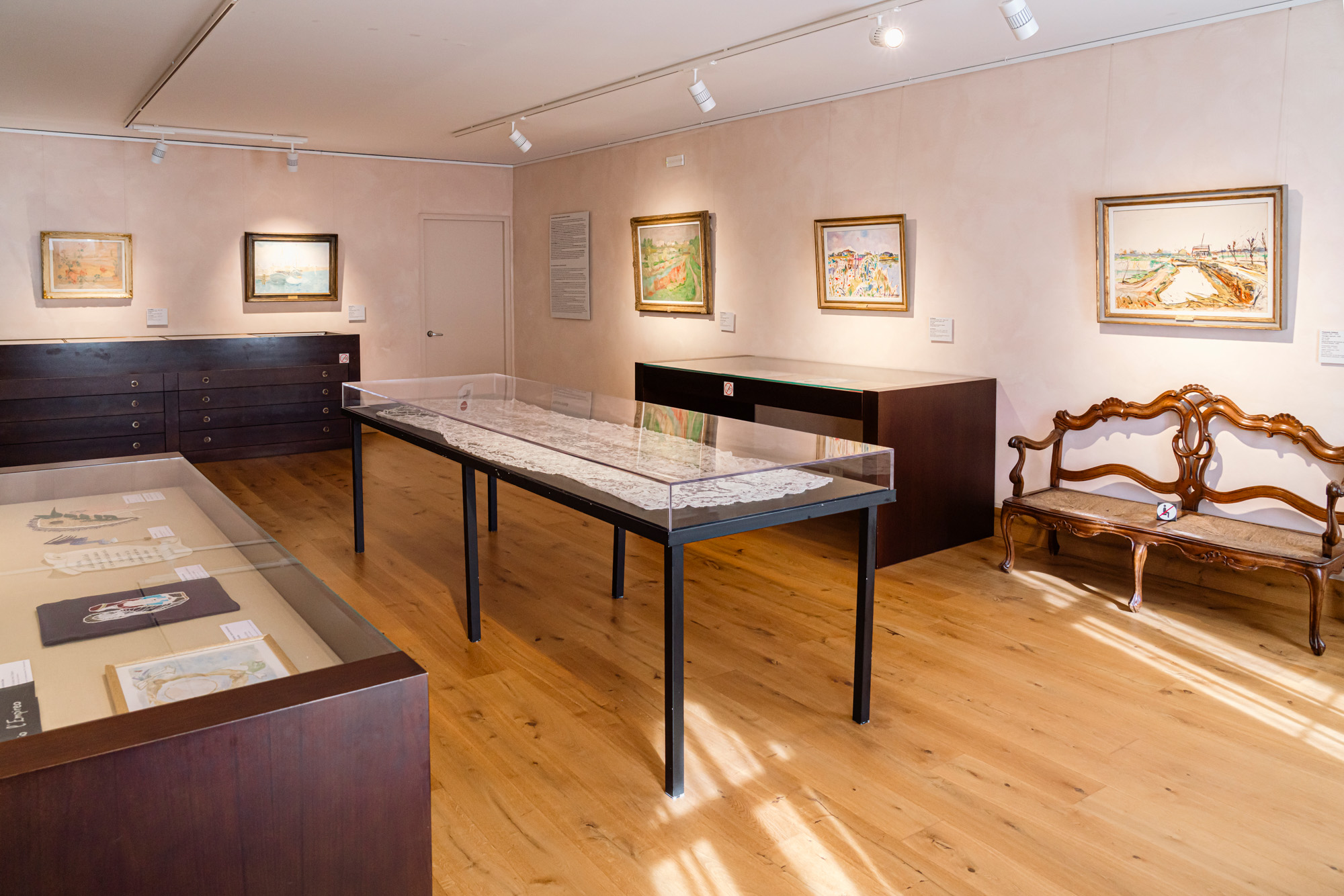
The Burano Prize. 1946–1956
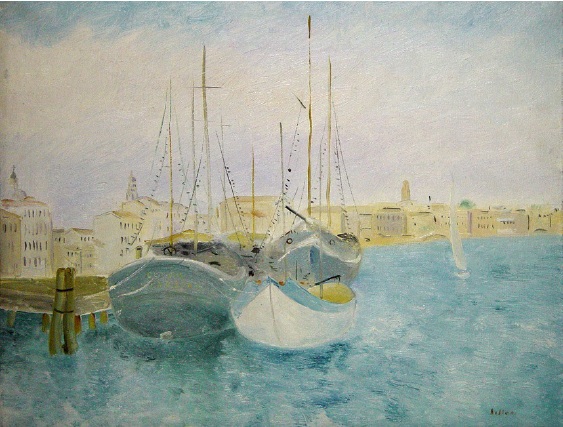
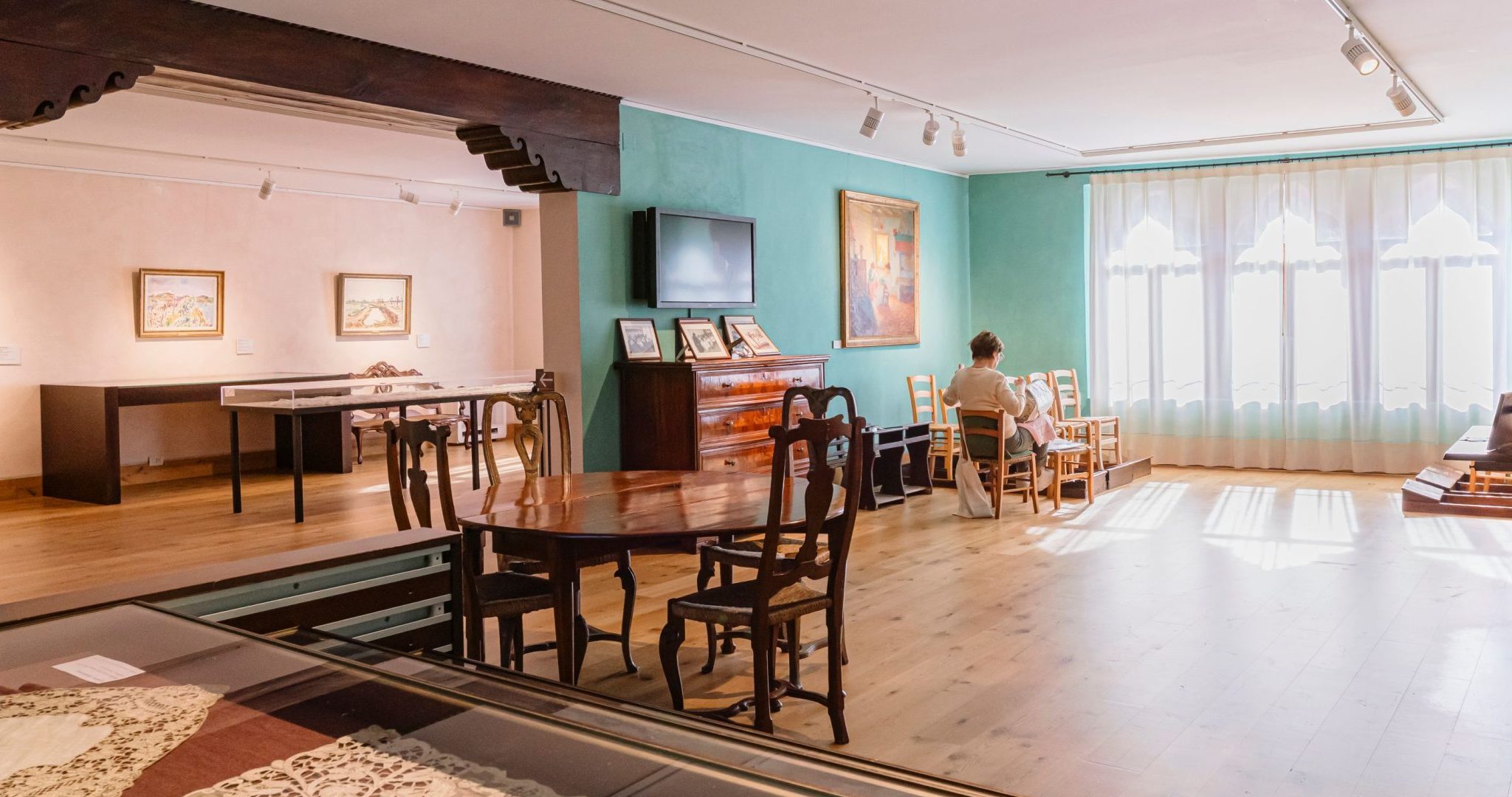
The Burano School of Painting emerged in the 1920s from the encounter between Venetian and foreign painters, drawn to the island’s landscapes. Officially recognised in 1939, it gained further prominence through the Burano Prize, awarded between 1946 and 1956. The permanent exhibition brings together the prize-winning works, documenting artistic developments and the transformation of the lagoon landscape.